
Repair or replace
Surface damage can hide failed base, settlement or drainage problems. Decide whether a repair would solve the cause before preserving concrete that is already moving.
Grizzly installs and replaces residential concrete in Everett, including driveways, walkways, steps, slabs and structural work. Older flatwork, alley access, utility cuts and compact yards make demolition routes, base preparation and drainage especially important before forms are set or a concrete truck is scheduled.
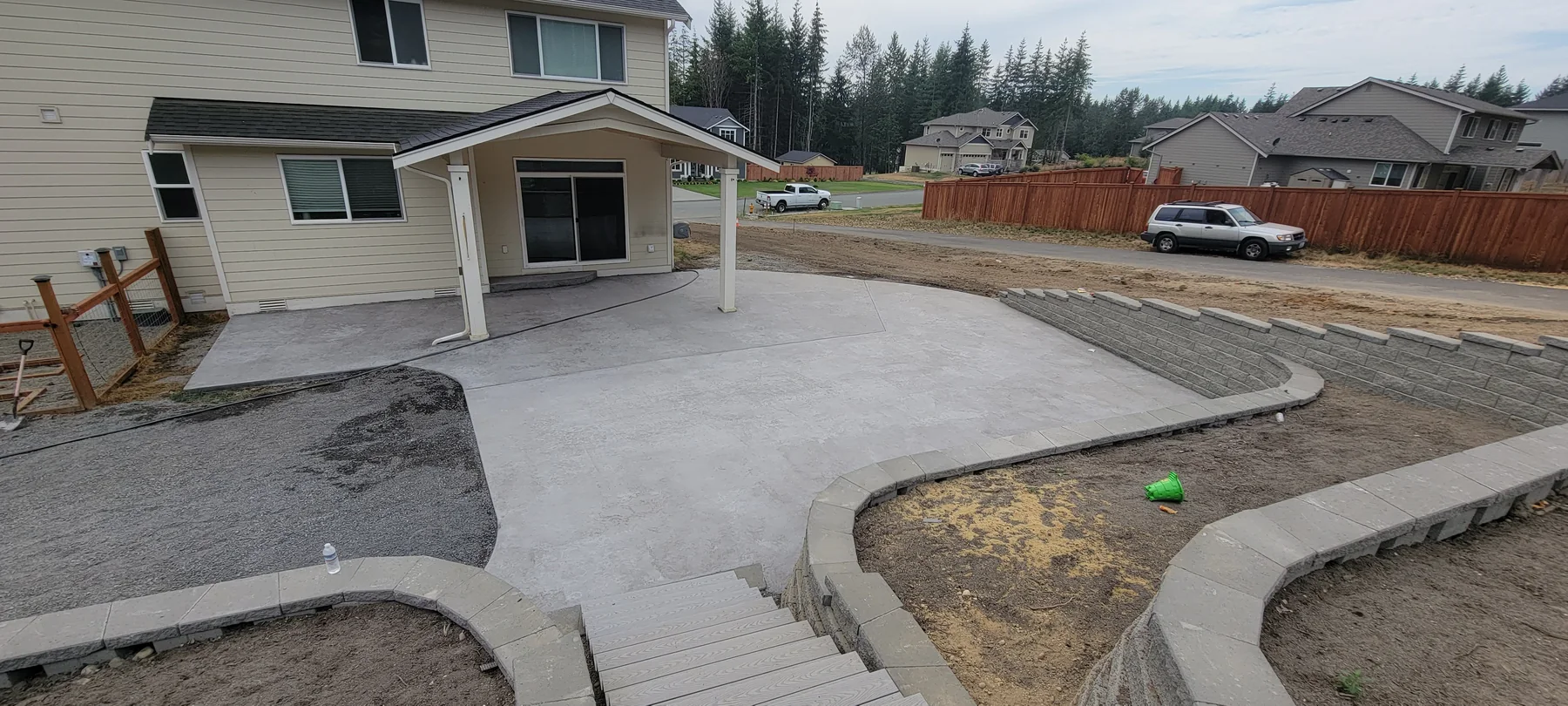
In older Everett neighborhoods, cracked concrete may sit beside shallow utilities, patched side sewers, mature roots or additions built at different times. Removal should expose why the slab moved, not simply reproduce its old elevations and drainage path.
Alley access can help, but it is not automatically usable for concrete delivery or heavy equipment. Measure width, overhead clearance, pavement condition and turning space, then decide whether concrete should be pumped, moved by buggy or placed from the street.
The useful estimate is based on the site and scope, not a generic square-foot number.
Planning, access, review and construction conditions determine the sequence.
Everett Permit Services is the starting point. Flatwork entirely on private property may follow a different path from structural slabs, retaining work, driveway approaches or construction affecting the public right-of-way. Confirm the exact scope and whether civil review is needed before demolition.
Everett accessory dwelling unit guidance
Guidance reviewed July 15, 2026.
Always confirm current rules for the specific parcel and scope. This page is general project guidance, not a permit determination.
Real project images selected for this kind of work.
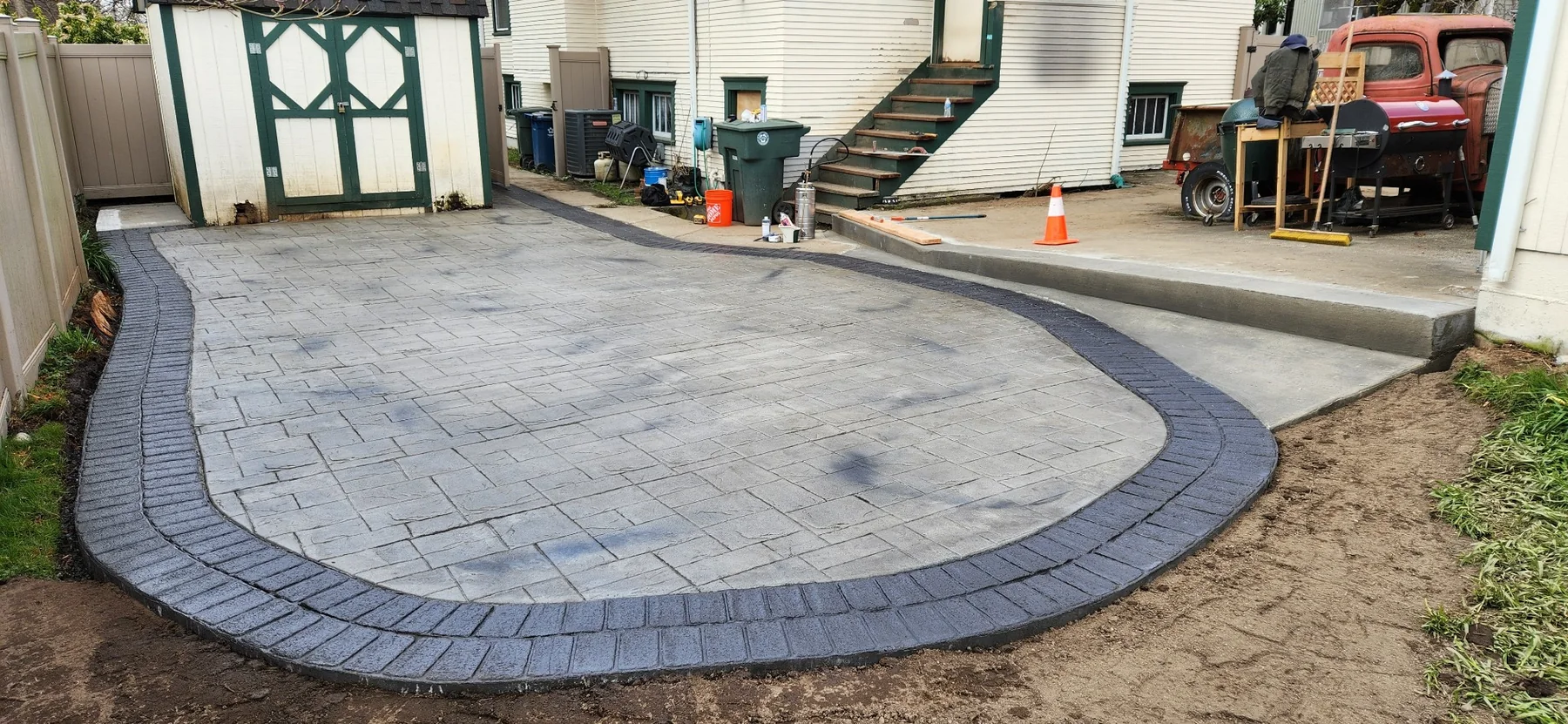
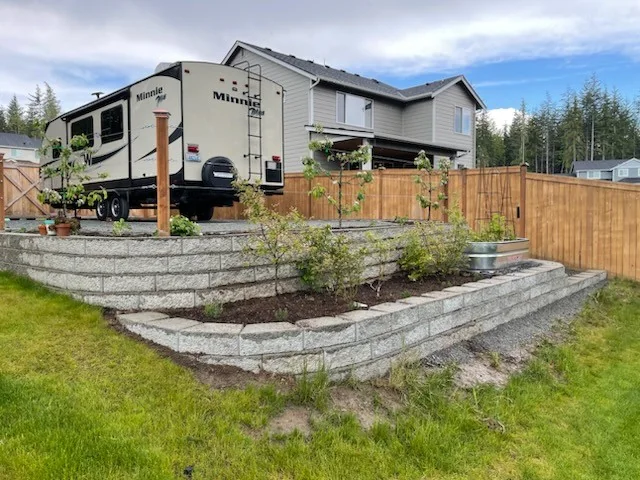
Surface damage can hide failed base, settlement or drainage problems. Decide whether a repair would solve the cause before preserving concrete that is already moving.
Broom, exposed-aggregate and decorative finishes differ in appearance, maintenance and wet-weather traction. Match the finish to how the surface will actually be used.
Set elevations and runoff direction before forms are built so the new work moves water away from the home without shifting a problem to a neighbor or public street.
Yes, subject to project fit and scheduling. Start by sharing the property address, the outcome you want, current-condition photos and any drawings or permit records. Those details help separate a workable construction scope from assumptions that still need City or engineering review.
Sometimes. Confirm legal and physical access, overhead clearance, turning room and pavement capacity. Where direct truck access is not appropriate, pumping or small material-moving equipment may be a safer plan.
Everett Permit Services is the starting point. Flatwork entirely on private property may follow a different path from structural slabs, retaining work, driveway approaches or construction affecting the public right-of-way. Confirm the exact scope and whether civil review is needed before demolition.
Share the address, approximate dimensions, access photos and the existing condition. Also flag demolition around older utilities or adjoining masonry, alley, street or pump access to the forms, base correction where settlement or roots are present. A site visit can then verify quantities, elevations and the work that belongs in the construction sequence.
Ready to build? Share the basics and we’ll start with a clear, straightforward conversation.